
Buying a new heating and cooling system is a big expense, and most homeowners go into it with little to go on beyond a price and a brand name. Joe’s Heating & Air Repair takes a different approach to heat pump installation in and around Surf City, NC, starting with what your house actually needs before anyone talks about equipment. Coastal homes deal with humidity, salt air, and cooling seasons that stretch on for months, so a system that works fine three counties inland can fall short here. You'll understand what we're recommending and why by the time we hand you a quote.
Joe’s Heating & Air Repair is a family-run HVAC contractor based in Surf City, NC, serving homeowners in nearby communities. Founded in 2022, our company specializes in residential heat pumps, with installation being the largest part of our work. Every job includes a load calculation, equipment options matched to your home and budget, startup testing, and a walk-through of how the system runs. Our technicians are EPA 608-certified, and we install equipment from Amana, Daikin, and Goodman.
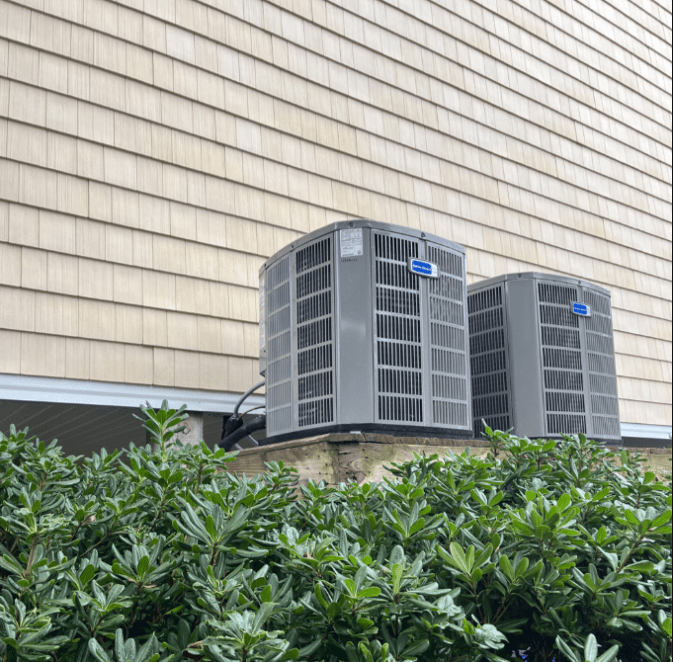
Homeowners call us fairly often about equipment that's only a few years old but still can't keep the house comfortable. Rooms run unevenly, the air feels sticky even when the thermostat reads 72 degrees Fahrenheit, and the unit either runs constantly or clicks on and off every few minutes. The system is new, so the assumption is usually that something's broken.
Most of the time, the equipment is fine, and the sizing was wrong from the start. A unit that's too large cools the air too quickly, satisfies the thermostat, and shuts off before it runs long enough to remove humidity, which is why the house feels damp. Undersized equipment has the opposite problem, running nonstop through July without ever catching up. Both situations trace back to an installation in which nobody measured the house.
Our process fixes that at the front end. We calculate the heating and cooling load based on square footage, insulation, window placement and orientation, ceiling height, and how the home sits on its lot, then match equipment to those numbers. Ductwork gets inspected during the same visit, since a leaky or undersized duct will hold back even the best system. Once installation day arrives, our heat pump installers verify refrigerant charge, confirm airflow, calibrate the thermostat, and run a temperature split test before the job is called finished.
What you end up with is a system that reaches temperature, shuts off, and stays quiet in between. Humidity stays under control, rooms hold closer to the same temperature, and the equipment isn't grinding through extra run hours it was never designed for. You also get an installation report showing how everything performed at startup, so there's a record of what you paid for.
Here's a closer look at what we offer regarding our heap pump installation service.

Heat pumps move heat rather than generate it, making them well-suited to the mild winters and long summers along this stretch of coast. One piece of equipment covers both seasons, so there's no separate furnace to maintain or replace down the road. Efficiency ratings vary widely across models, and we'll explain what those numbers mean for your monthly bill before you make your choice.
Amana, Daikin, and Goodman all make solid residential equipment, and the right pick depends on your home, how long you plan to stay, and what you want to spend. Our heat pump installation service includes laying out a few options at different efficiency levels with the trade-offs spelled out plainly.
Whether you're replacing something that finally quit or putting heating and cooling into a space that never had it, the installation itself follows the same careful sequence. Line sets get routed cleanly, penetrations are sealed against coastal weather, and surfaces in your home stay protected while we work. Qualifying installations come with a one-year labor warranty in addition to the manufacturer's coverage.
Load calculations are where every install starts, and they're a genuine specialty of ours, since we prepare them for other contractors in the area as well. Running the numbers takes a little longer than eyeballing square footage, though it prevents nearly every comfort complaint that shows up years later. That extra step is a big part of what separates a heat pump service call that solves the problem from one that replaces parts.
Single-family homes, additions, garage conversions, and older houses being brought up to date are all within our scope. Each situation brings its own constraints, from tight framing to limited electrical capacity, and those get sorted out during planning rather than on installation day. Talking through your plans early gives us room to flag anything that might complicate the job.
If your unit still runs but you've noticed the house takes forever to catch up on a hot afternoon, that's usually efficiency dropping off rather than an outright failure. A heat pump replacement gets you back to a system that reaches the set temperature and shuts off as it should, and today's equipment does so using noticeably less electricity.
Salt air near the coast is rough on outdoor equipment, and coils sitting a few blocks from the water take a beating that inland systems never see. Our Heat Pump Repair services include cleaning and inspecting the parts that take the most beating out here, along with diagnostics when something's already acting up.
Older homes around here were often built without ductwork, and running new ductwork through plaster walls gets expensive. A mini-split installation lets you get around that by using a small indoor head connected to an outdoor unit via a line set about 3 inches in diameter. You can set different temperatures in different rooms, too, which can end a few household arguments.
Ductless systems require more regular cleaning than most people expect, mainly because the filters and blower wheel are located in the living space and collect whatever's in the air. Mini-Split Repair keep airflow strong and drains clear, and when something's genuinely broken, we track down the cause instead of guessing at parts.
Equipment brand matters less than most advertising suggests, and the quality of the install matters more. Our HVAC Installation work includes verifying refrigerant charge, confirming airflow, calibrating the thermostat, and testing temperature split before we call it finished.
Nobody enjoys hearing that their system needs work, so we try to make the conversation as clear as possible. HVAC Repair and Maintenance with us means you find out what failed, why it failed, and what it'll take to keep it from happening again, all in language that makes sense.
Both contractors and homeowners tend to leave heating and cooling for last. By then, the easy routing options are already gone. Getting us involved during HVAC renovations means we can plan around what you're building instead of retrofitting after the fact, whether that's a second story, a garage conversion, or a full gut of an older house.
Homeowners tend to stick with us for a handful of straightforward reasons.
Refrigerant handling is regulated work, and every technician we send holds EPA 608 certification along with the training to do the job right.
A family-run shop lives and dies on its reputation in a community this size, which keeps us honest in a way the big chains never quite manage.
Coverage includes 30 days on standard repairs, a one-year labor warranty on qualifying installations, an available one-year quarterly monitoring program, and full support for manufacturer warranties.
First-time customers take 10% off their service.
Sticking with Amana, Daikin, and Goodman means dependable equipment and parts we can actually get our hands on when we need them.
Yes. Heat pumps provide both heating and cooling in a single system, making them a practical option for North Carolina's relatively mild winters and hot, humid summers. A properly planned heat pump installation should account for the home's size, layout, insulation, and comfort needs.
A heat pump installation may require a mechanical permit and related inspections in Surf City, depending on the project's scope. Homeowners should check current local requirements before work begins, as permitting rules can vary by installation and property.
Many residential heat pump installation projects can be completed within a day, although more involved jobs may take longer. Changes to ductwork, electrical components, equipment location, or other parts of the HVAC system can add time to the installation.
The right heat pump size depends on more than your home's square footage. An HVAC contractor should evaluate factors such as insulation, windows, ceiling height, layout, air leakage, and local weather conditions before recommending equipment.
You can install a heat pump year-round, but planning can help you avoid replacing equipment during the hottest or coldest stretches of the season. If your current system is aging or struggling, scheduling a heat pump installation before a breakdown gives you more time to review your options.
FAQs reviewed by Joe Dubois, owner of Joe's Heating & Air Repair, a certified HVAC contractor in North Carolina.
Reach out, and we'll measure, explain your options, and give you a straight answer about what makes sense.
Business Name: Joe's Heating & Air Repair
Address: Surf City, NC, 28445
Phone: 910-619-0335
Business Hours:
Mon - Fri: 7:30 AM –5:00 PM
Sat-Sun: Closed
10% Off for New Customers
30-day warranty on standard repair work
Manufacturer warranties honored
One-year labor warranty on qualifying installations
10-year parts warranty on qualifying installations
One-year quarterly monitoring program available
Installation reports are provided with new installations
